


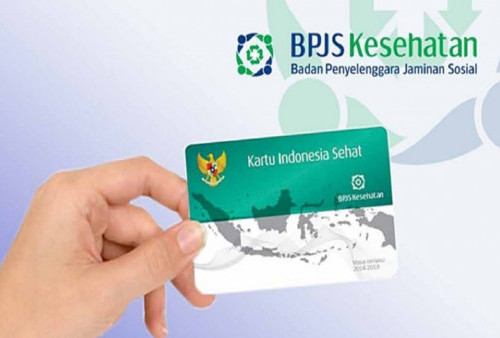

President Joko Widodo (Jokowi) ordered all hospitals working with BPJS Kesehatan to implement the Standard Inpatient Class (KRIS) system on June 30, 2025.
That way, the government will equalize the BPJS Health service classes, which have been divided into three classes.
The regulation is contained in Article 103B of Presidential Regulation (Perpres) No. 59 of 2024 concerning Amendments to Presidential Regulation No. 82 of 2018 concerning Health Insurance.
This scheme led the public to assume that all hospitals would abolish classes 1, 2, and 3 and replace them with the implementation of KRIS.
However, a number of parties, including Health Minister Budi Gunadi Sadikin and BPJS Kesehatan President Director Ghufron Mukti, have disputed this assumption.
Ghufron stated that the implementation of KRIS does not remove the class level of inpatient services for participants.
“There is still a standard class, class 2, class 1, and VIP class. But this is once again a non-medical issue,” explained Ghufron, on Monday (5/13).
According to him, the Presidential Regulation is oriented towards the uniformity of inpatient classes that refer to 12 criteria.
What are the 12 criteria and what exactly does KRIS mean in BPJS Kesehatan?
Check out the following explanation.
What is KRIS in BPJS Health?
Presidential Regulation 59/2024 sets KRIS as the minimum standard of inpatient services that participants of the National Health Insurance program must receive.
Deputy Minister of Health, Dante Saksono, said in June 2023 that the implementation of KRIS focuses on improving beds.
With this improvement, class 1 BPJS Health patients who have been occupying rooms with a capacity of 1-2 people per unit, class 2 with a capacity of 3-5 people per room, and class 3 with a capacity of 4-6 people per room will change.
With the KRIS system, the maximum will be 4 beds in one room.
Hospitals must set bed reduction as one of the 12 criteria to implement the abolition of the class 1-3 system.
Dante said the government has started testing the implementation of KRIS in several hospitals.
The result; the public satisfaction index was recorded to have increased after the implementation of KRIS.
The 12 criteria for class facilities with the KRIS system are:
- Building components used do not have a high degree of porosity
- Air ventilation meets the air exchange in a regular treatment room of at least six air changes per hour.
- Artificial room lighting follows the standard criteria of 250 lux for lighting and 50 lux for bed lighting.
- Completeness of the bed in the form of two contact boxes and nurse calls on each bed
- Nightstand per bed
- Can maintain room temperature from 20-26 degrees Celsius
- Rooms have been divided by gender, age, and disease type (infectious and non-infectious)
- Maximum inpatient room density of four beds, with a minimum distance between bed edges of 1.5 meters
- Blinds or partitions with rails attached to the ceiling or hanging down
- Bathroom in the inpatient room
- Bathroom complies with accessibility standards
- Oxygen outlet
KRIS BPJS Health Contribution Rate
With the implementation of this latest regulation, the amount of BPJS Kesehatan contributions will also change. However, Presidential Regulation Number 59 of 2024 has not stated how much the new BPJS Health contribution is.
Based on Article 103B paragraph 8 of the Presidential Regulation, the government will decide the amount of BPJS Kesehatan contributions for KRIS on July 1, 2025.
This means that the current BPJS Health contribution has not changed.
That way, participants still follow the old rules, namely Presidential Regulation Number 64 of 2020 with class 1, 2, and 3 schemes, for the amount of BPJS Health contributions.
“For JKN participants in the Non-Recipient Worker (PBPU) segment or independent participants in class 2, the contribution is Rp150 thousand, class 2 is Rp100 thousand and class 3 is Rp42 thousand per person per month with a subsidy of Rp7,000 per person per month from the government, so that what is paid by class 3 participants is only Rp35 thousand,” explained BPJS Kesehatan Assistant Deputy for Public Communication and Public Relations Rizzky Anugerah.

KH Contact
Understanding and following the latest developments regarding the implementation of the Standard Inpatient Class (KRIS) in BPJS Kesehatan is very important for the community to ensure optimal health services. For KH Pals who need help in understanding this regulation or consultation about BPJS Kesehatan, Kontrak Hukum is ready to help.